
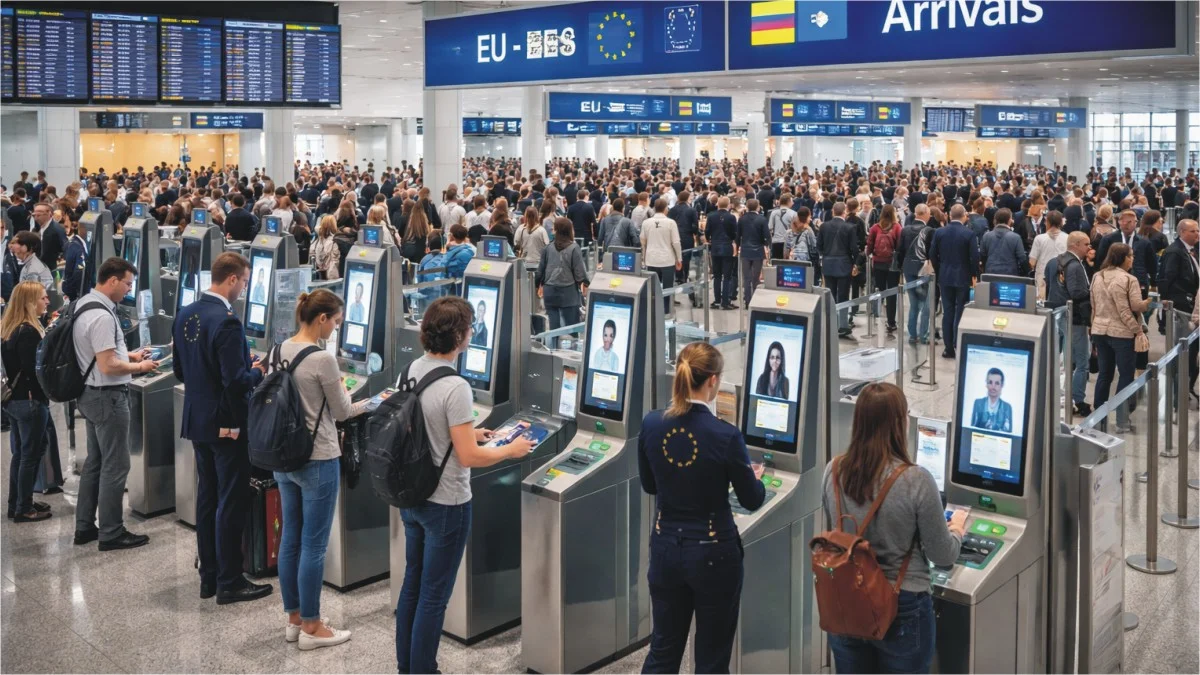
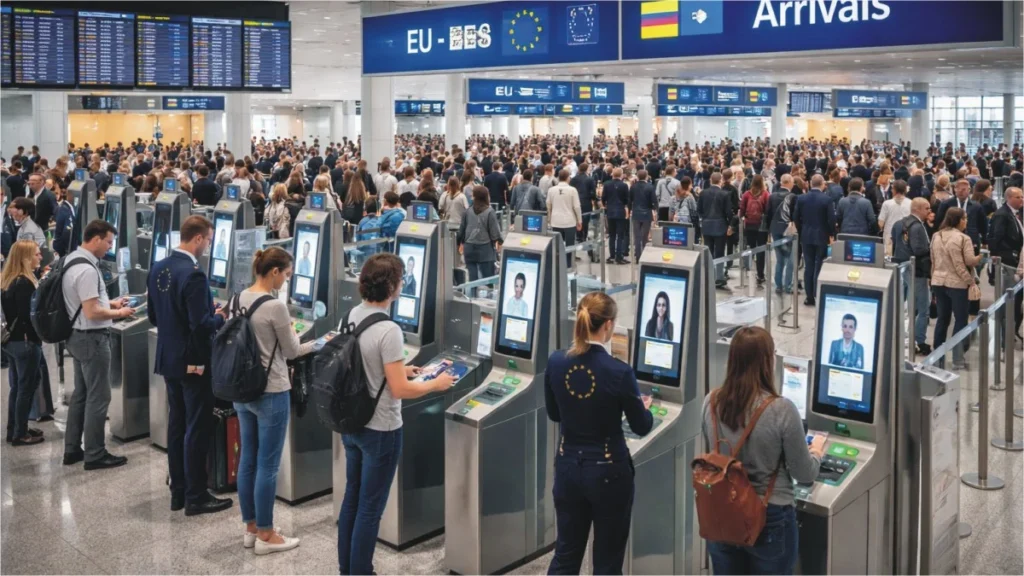
Starting now, the European Union has pushed back the full launch of its new biometric border system to September 2026, easing immediate strain on airports, ports, and rail crossings ahead of the peak summer season. The decision follows internal trials that exposed capacity limits at some of Europe’s busiest entry points.
The move was confirmed by the European Commission after tests at major airports, ferry ports, and the Channel Tunnel revealed long queues and operational risks. Officials flagged staff shortages, slow kiosks, and poor terminal layouts as core problems that could disrupt cross border flows.
What Changed Inside Europe’s Borders
The delayed system is the Entry Exit System EES, designed to replace passport stamps for non EU visitors with digital records. These records include fingerprints and facial images taken on first entry and checked on later visits.
Since its phased start in October 2025, around 35 percent of third country arrivals have already passed through biometric checks at selected locations. During the Christmas travel peak, industry groups reported queues running over two hours at some hubs.
Airlines and port operators warned that a full rollout by April 2026 risked crowding, missed connections, and safety issues inside terminals. These warnings intensified as Europe moved toward its busiest travel months.
Why Pressure Is Building
Europe’s external borders are handling rising demand from many regions at once. This includes leisure travel, business travel, and cross channel movement between France and the United Kingdom.
At Dover, Folkestone, and several major EU airports, operators reported knock on effects when delays on one side caused missed return slots on the other. Coaches, ferries, and short haul flights faced tight turnaround windows that left little room for error.
The Commission’s decision creates a seven month buffer. This window allows Schengen states to add equipment, redesign arrival halls, and train staff before the system becomes mandatory everywhere.
A Regional Pattern, Not a Local Issue
The delay reflects a wider pattern across Europe’s travel system. Border control, aviation, and rail operators are under pressure to process higher volumes while meeting new security rules.
Officials stress that EES is not cancelled. Through 2026, Europe will operate a mixed system where some crossings still use manual stamps while others rely on biometrics. This uneven rollout is expected to test coordination between countries and transport modes.
Analysts say the choice to slow the scale up shows a shift in priorities. Stability and safety now outweigh speed as governments seek to avoid visible breakdowns during high traffic periods.
What Officials Signal Going Forward
The European Commission says the revised timeline keeps the political goal intact. External border control remains central to EU policy, but disruption to normal travel flows is being treated as a system risk.
Industry observers note that EES will later connect with other EU travel databases, tightening checks across the Schengen perimeter. When fully active, the system will affect millions of arrivals each year from multiple regions.
For now, Europe’s border agencies are focused on readiness rather than expansion. The months ahead will test whether infrastructure and staffing can meet the scale required by a continent wide biometric regime.
Outlook: A Slower Path to a Tighter Border
Looking ahead, September 2026 is shaping up as a new stress point for Europe’s borders. If upgrades stay on schedule, the transition may be smoother. If not, delays could return during the next peak season.
What is clear is that Europe is entering a long adjustment phase. Digital borders are coming, but the system is being built under real world pressure, not in theory.
Check Out



M. Arshad is a Senior Correspondent specializing in EU-South Asian migration policy and international labor corridors, with over 12 years of experience reporting on bilateral trade agreements.