
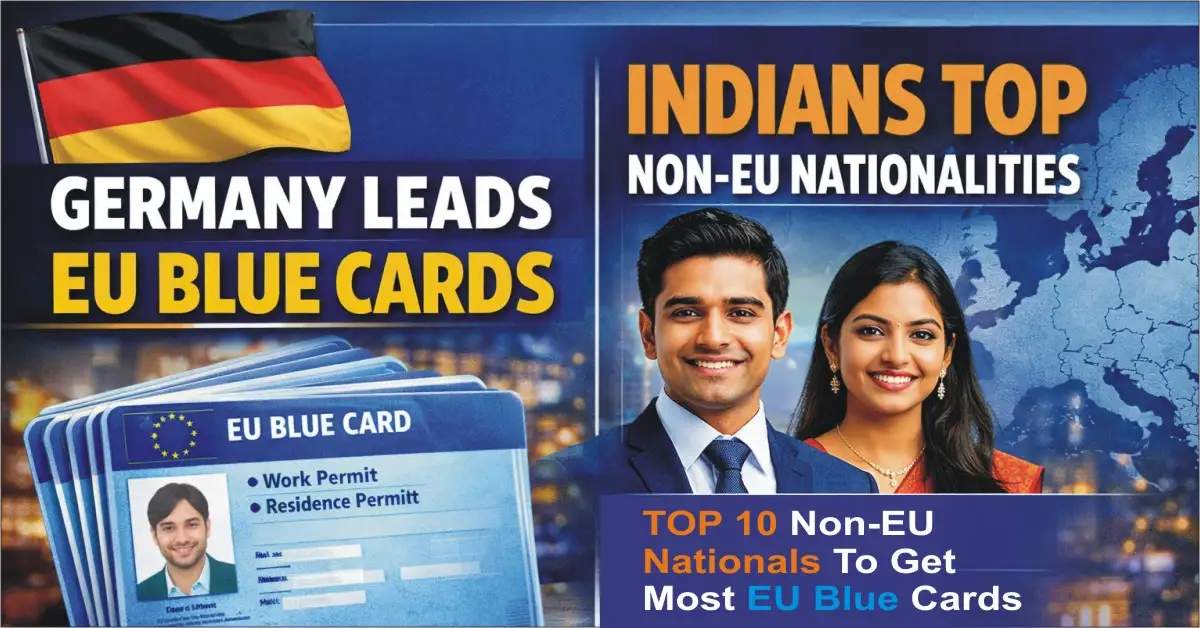
Germany issued far more EU Blue Cards than any other country in 2025, confirming its position as Europe’s main gateway for highly skilled non EU workers. The EU Blue Card program, designed to attract global talent, continues to be driven largely by Germany’s labor needs and flexible immigration rules.
Data from 2024 and early 2025 shows Germany accounted for around 72 to 78 percent of all EU Blue Cards issued across the bloc. In 2024 alone, Germany granted 56,252 cards out of a total 78,096 issued in the EU. Poland ranked a distant second with 5,853 cards, followed by Hungary with 2,942 and France with 2,775. Spain completed the top five with 1,924.
Germany’s dominance is linked to acute shortages in IT, engineering, and healthcare. The country also relies on the EU Blue Card as its main skilled migration route, offering lower salary thresholds for shortage jobs and faster processing times, especially for young professionals.
EU Blue Card: Top 10 Nationalities Who Received the Most Cards
Indian nationals were the largest beneficiaries of the EU Blue Card in 2024. They received 16,268 cards, or 20.8 percent of the total. Russia followed with 6,657 cards, then Türkiye with 5,645 and China with 4,550.
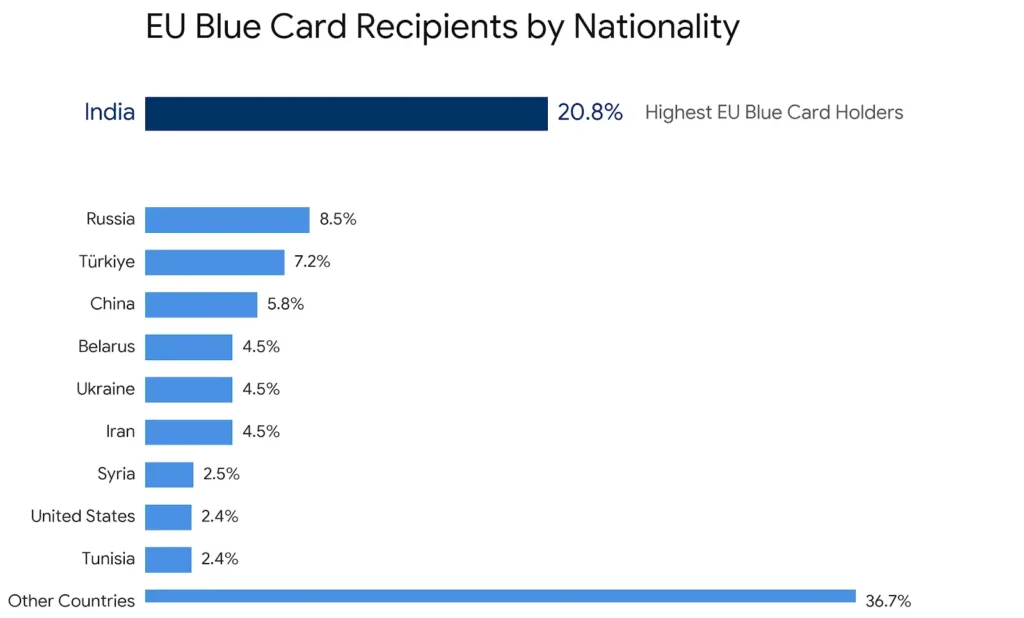
Belarus, Ukraine, and Iran each received just over 3,500 EU Blue Cards. Syria, Tunisia, and the United States rounded out the top ten, each with fewer than 2,000 approvals. Together, these ten nationalities accounted for more than 63 percent of all EU Blue Cards issued.
For skilled workers and employers alike, the EU Blue Card remains a critical pathway, with Germany clearly setting the pace for Europe’s talent race.
Check Out




Having 16 years of experience about Immigration, Visit Visa, Work Visa, Study Visa and Careers in Europe. We keep our eyes open and bring the latest and accurate content for our readers.