
Updated – 19 November 2026 · By Europe Observer Team
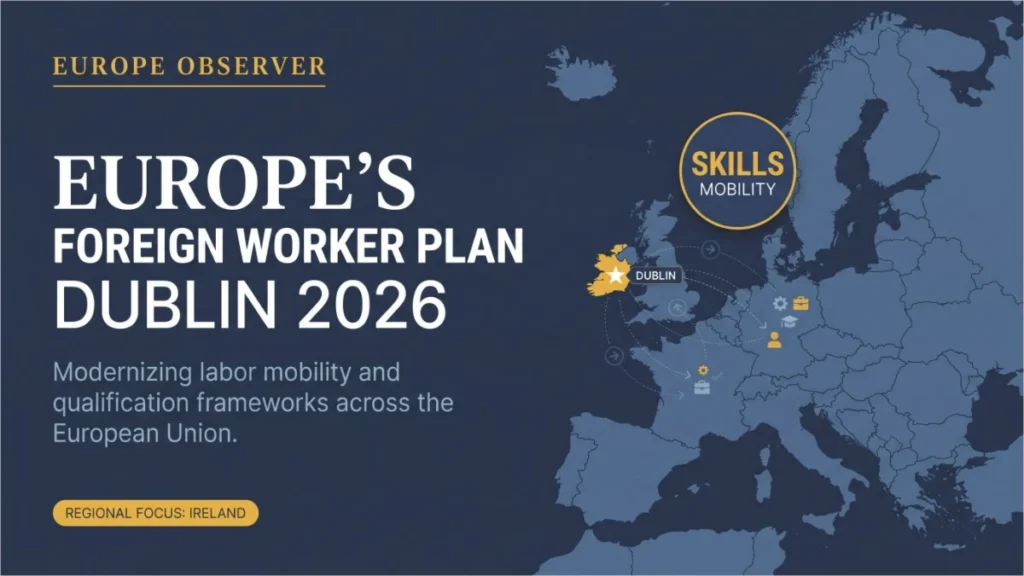
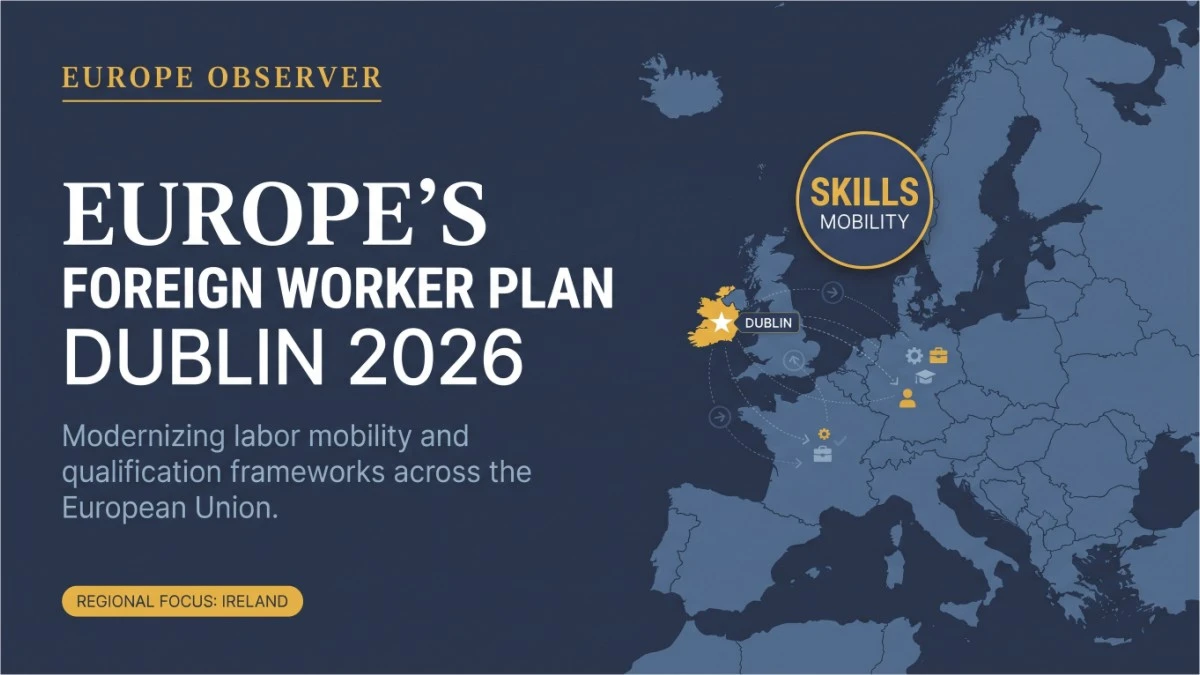
European migration experts and government officials are meeting in Dublin today to discuss how Europe can attract more foreign workers and deal with growing labour shortages.
The two-day conference, organised by the European Migration Network (EMN) and Ireland’s Presidency of the Council of the EU, started on 19 November 2026. It will continue until 20 November at the Royal Hospital Kilmainham in Dublin.
One of the main topics is how European countries can recruit skilled workers from outside the EU. Discussions will also cover the EU Talent Pool, international recruitment partnerships and the rights of foreign workers.
The meeting comes as European countries face changing labour needs due to an ageing population, new technology and the green transition.
Key points
- The conference is taking place in Dublin on 19 and 20 November 2026.
- It is organised by EMN Ireland under the Irish Presidency of the Council of the EU.
- Foreign worker recruitment from outside Europe is a major topic.
- The EU Talent Pool and international recruitment partnerships are on the agenda.
- Government officials will discuss worker protection and fair employment conditions.
- The conference will also examine ways to help skilled migrants remain in Europe.
- The EU Talent Pool platform is expected to become fully operational by the end of 2027.
Why are European countries discussing foreign worker recruitment?
European labour markets are changing. Many countries need workers with skills in areas such as healthcare, technology, engineering and other important industries.
At the same time, demographic ageing is changing the size and structure of the European workforce. The European Commission says attracting and retaining talent from outside the EU is an important part of its migration and labour strategy.
The Dublin conference will examine how governments can match foreign workers’ skills with the needs of European employers. The discussions will also consider how recruitment can benefit both the countries receiving workers and the countries from which workers come.
What is the EU Talent Pool?
One of the main subjects at the Dublin conference is the EU Talent Pool. The European Commission describes it as an EU-wide platform that will help employers find workers from countries outside the European Union.
The platform is designed to connect international job seekers with employers in EU countries that take part in the system. Job seekers will be able to create profiles containing information about their:
- Skills and qualifications
- Work experience
- Language knowledge
- Professional background
European employers will be able to search these profiles and identify people who match their vacancies. The system is expected to focus on occupations where European countries face labour shortages.
However, the EU Talent Pool is not a work visa. Finding a job through the platform will not automatically give someone permission to live or work in a European country. Workers will still need to meet the immigration and employment rules of the country where they receive a job offer.
When will the EU Talent Pool become operational?
The EU Talent Pool Regulation entered into force on 1 June 2026. The European Commission is now working on the development of the platform. It expects the system to become fully operational by the end of 2027.
This means foreign workers should not confuse the new platform with an already operating EU-wide recruitment website. The system will also depend on participation by EU member states. Their participation is voluntary.
Will Pakistanis and Indians be able to find jobs through the EU Talent Pool?
The EU Talent Pool is designed for job seekers who live outside the European Union. This means people from countries such as Pakistan, India, Bangladesh and other non-EU countries fall within its intended international recruitment audience.
However, access to the platform does not mean that every country or occupation will have the same opportunities. The available vacancies will depend on participating EU countries and their labour market needs.
Employers will also decide which qualifications, experience and language skills they require. The platform will help connect job seekers with employers. It will not guarantee a job, a work permit or a visa.
What are Talent Partnerships?
Another important topic at the Dublin conference is international recruitment through Talent Partnerships.
These partnerships are designed to connect the skills of workers in non-EU countries with the needs of European employers. They can support training, skills development and organized recruitment between countries.
The European Commission says the EU Talent Pool will also support these partnerships. The EU has already announced an EU-India pilot linked to its wider efforts to improve skilled labour mobility.
This is an important development for countries outside Europe because it shows that the EU is looking beyond its borders to find workers with the skills its industries need. However, the conference has not announced a new recruitment agreement with Pakistan or other South Asian countries.
Will Europe make it easier for foreign workers to move to the EU?
That is one of the main questions behind the Dublin discussions.
European officials are examining different ways to attract international talent while protecting workers from unfair treatment.
The conference agenda includes:
- International recruitment from outside the EU.
- Better use of skills and professional qualifications.
- Cooperation between European and non-European countries.
- Fair employment conditions.
- Protection against exploitation.
- Labour market integration.
- Long-term retention of skilled workers.
The discussions also recognise that getting a job is only one part of migration.
Housing costs, living expenses and integration opportunities can affect whether foreign workers decide to stay in Europe.
Will the conference announce new European work visas?
No new EU-wide work visa has been announced as part of the conference opening. The meeting is focused on policy discussions, international recruitment and future labour migration systems.
Individual EU countries will continue to control their own work permit and residence procedures under their national laws and applicable EU rules. Any new visa route or recruitment agreement would need a separate official announcement.
For job seekers, the EU Talent Pool is a development worth following, but it should not be treated as an open visa application program.
How can people follow the conference?
The European Commission has published the official conference information and agenda. The second day of the event, 20 November 2026, will also be livestreamed for the public.
Readers can follow the discussions through these official resources:
- European Commission: EMN Ireland Presidency Conference – Official Announcement
- EU Talent Pool: European Commission – Official Information
- EU Talent Partnerships: European Commission – Talent Partnerships
What happens next?
The conference will continue until 20 November. Its discussions may provide further details about Europe’s future approach to international recruitment. The development of the EU Talent Pool will also remain important during 2027, when the European Commission expects the platform to become fully operational.
For workers in Pakistan, India and other countries outside Europe, the biggest question is whether these policy discussions will lead to more practical recruitment opportunities and organised pathways into European jobs.
Europe is discussing how to attract foreign talent. The next challenge will be turning those discussions into real opportunities for workers and employers.
Frequently asked questions
Where is the European migration conference taking place? It is being held at the Royal Hospital Kilmainham in Dublin, Ireland.
When is the conference? It takes place on 19 and 20 November 2026.
What is the main topic of the meeting? The conference is discussing future labour migration policy, foreign worker recruitment and skills shortages in Europe.
What is the EU Talent Pool? It is an EU-wide recruitment platform designed to connect employers with job seekers living outside the European Union.
Can Pakistanis register for the EU Talent Pool? The platform is designed for job seekers from outside the EU, including Pakistanis. However, it is still under development.
When will the EU Talent Pool open? The European Commission expects it to become fully operational by the end of 2027.
Does the EU Talent Pool provide a work visa? No. It helps connect workers with employers, but national work permit and visa rules will still apply.
Has Europe announced new work visas at the conference? No. The conference is discussing policy and recruitment approaches, not announcing a new EU-wide visa.

J. Maham is a specialized travel and immigration analyst with a focus on European work permits and South Asian’s mobility. With over 5 years of experience tracking global visa policy shifts, Maham provides verified, actionable insights for professionals seeking legal pathways to the EU and beyond.