
Major shifts in federal policy have officially taken effect across the country this week, fundamentally altering how newcomers live, work, and settle. As of early April 2026, the federal government has implemented eight substantial changes impacting permanent residence (PR) applications, temporary work permits, and family sponsorships. These updates represent one of the most significant regulatory overhauls in recent years, affecting everyone from rural business owners to global mobility managers.
The new rules aim to streamline processing times, empower local governments, and adjust administrative costs to match current economic realities. For foreign nationals and employers relying on international talent, understanding these updates is no longer optional. It’s a critical step in keeping application pipelines moving without costly delays.
If you’re planning a move or managing a corporate workforce, here is a detailed breakdown of the new policies. We outline exactly what has changed, why it matters, and how it directly affects your path forward.
Provinces Take Control of PR Selection
The most profound change targets the Provincial Nominee Program (PNP). Effective March 30, 2026, the federal government has handed exclusive authority over PR selection to individual provinces and territories. This move specifically targets two core eligibility factors: an applicant’s intent to reside in the region and their ability to establish themselves economically.
Historically, applicants faced a frustrating duplicate assessment. A province would nominate a candidate, only for Immigration, Refugees and Citizenship Canada (IRCC) to re-evaluate those exact same local economic factors. This often led to overturned decisions and massive processing backlogs that hurt regional labour markets.
Under the new single-assessment model, federal officers are stepping back from evaluating economic integration. Once a province issues a nomination certificate, the IRCC will primarily focus on identity verification, security checks, and medical admissibility.
This regulatory shift is a massive win for efficiency. Preliminary estimates from the Council of the Federation suggest processing times for PNP files could drop by two to four months. For employers running regional talent pipelines, particularly in the Atlantic and Prairie provinces, this provides much-needed certainty. If a nominee remains federally admissible regarding health and security, their PR status is essentially secured.
However, global mobility teams should prepare for more rigorous upfront vetting at the provincial level. Provinces may now scrutinize local job offers and regional work experience much more closely before granting a nomination. The onus is officially on the applicant to present a flawless settlement plan right from the start.
Rural Employers Catch a Break Under TFWP
Canada’s rural regions have been battling severe labour shortages, driven by population decline and the magnetic pull of large urban centers. To combat this, the government has introduced targeted flexibility within the Temporary Foreign Worker Program (TFWP). Specifically, this applies to the low-wage stream for employers located outside of census metropolitan areas (CMAs).
Previously, businesses were capped at a strict 10% limit on the proportion of low-wage temporary foreign workers they could hire. From April 1, 2026, through March 31, 2027, eligible rural employers can now hire up to 15% of their workforce through this stream. This seemingly small bump represents a massive lifeline for small-town businesses struggling to maintain production capacity or keep their doors open.
Additionally, a “retained proportion” measure protects businesses that already rely on international workers. Rural employers currently sitting above the old cap won’t be forced to dismiss staff. They can retain their current workforce proportion when submitting a new Labour Market Impact Assessment (LMIA).
This approach ensures small communities don’t face sudden, crippling staffing drops. Keep in mind that this is an opt-in measure at the provincial level. Employers must check if their specific province or territory has activated these new rural guidelines before applying.
Canada Immigration Fees Surge Across the Board
To keep pace with inflation and fund expanded fraud-detection infrastructure, application costs are climbing. These changes are sweeping, affecting everything from daily travel documents to final PR status. The updated fee structure provides clarity, but it also means applicants must budget significantly more for their journeys.
Starting March 31, 2026, Canadian passport fees increased for the first time since 2013. A standard 10-year adult passport now costs $163.50, up from $160. The five-year option increased from $120 to $122.50.
Citizenship costs have also seen an adjustment. The right-of-citizenship fee has ticked up slightly from $119.75 to $123. The processing fee for adult citizenship applications remains locked at $530, but authorities note that the right-of-citizenship cost will be revised annually from here on out.
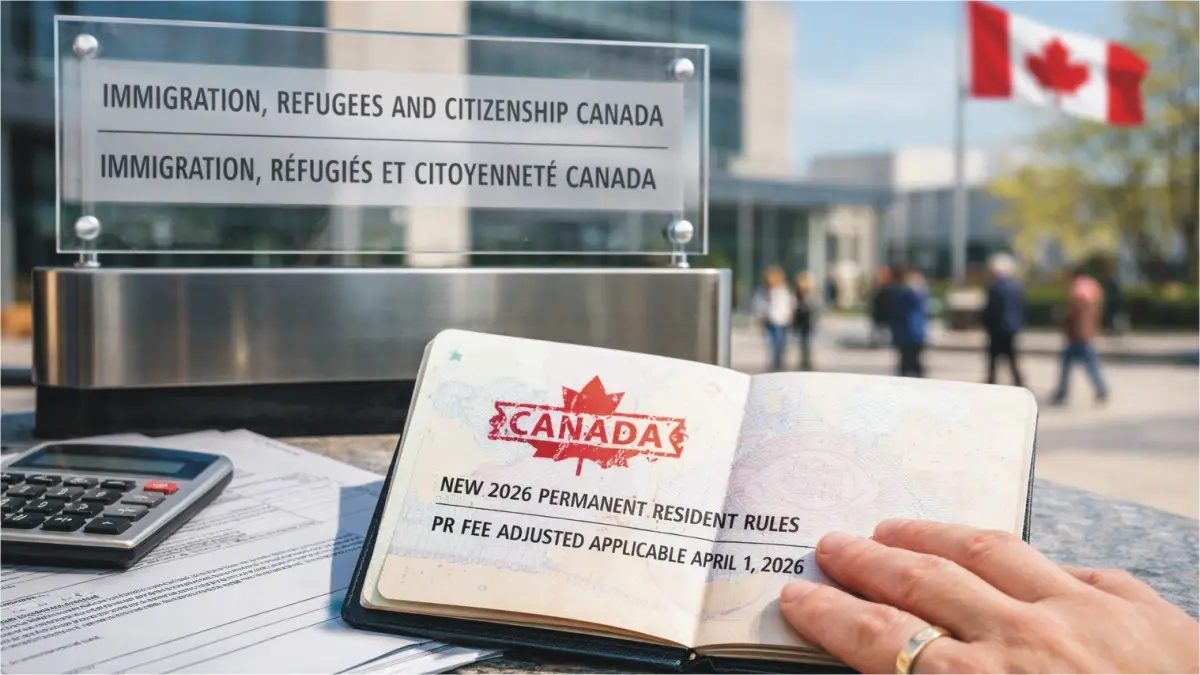
Looking ahead to later this month, permanent residence applicants will face steeper hikes. On April 30, 2026, the Right of Permanent Residence fee will jump by $25, landing at $600. Processing fees across economic streams, including Express Entry, are also expected to see average increases of about 12 percent.
Provincial programs are not immune to these rising costs. Saskatchewan, for example, just expanded its fee structure across all worker immigration streams. As of April 1, applicants to the Saskatchewan Immigrant Nominee Program (SINP) must pay a $500 application fee, double the previous $250 rate. Those needing a second review will face an additional $250 charge.
Relaxed Income Rules for the Super Visa
Family reunification remains a central pillar of federal policy, though wait times for parents and grandparents can be long. The Super Visa program allows older family members to stay in the country for up to five years per visit. This week, the government rolled out new income requirements to make sponsoring these visas slightly easier.
Previously, sponsors had to meet strict financial thresholds that proved difficult for many younger or newly established PR holders. Under the April 2026 updates, sponsors now have two distinct alternate pathways to prove their financial viability.
First, there is an extended income assessment. Sponsors can now qualify by meeting the income threshold in either of the two previous tax years, rather than being judged solely on their most recent filing. This helps those who might have faced a temporary dip in income due to illness or job transition.
Second, the system now allows a co-signer to supplement the host’s income. If the primary sponsor falls short, the income of the visiting parent or grandparent can actually be factored into the equation to meet the minimum requirement. This practical adjustment acknowledges the financial reality of multi-generational households.
Extended Settlement Services for Economic Immigrants
Securing permanent residency is only the first step in a successful migration journey. Integration into the local economy and community is equally critical. Recognizing this, the government has overhauled eligibility for federally funded settlement support.
Economic immigrants can now access these crucial settlement services for up to six years after obtaining their permanent resident status. These programs include language training, employment counseling, and community orientation programs.
In the past, newcomers faced strict cut-offs that often left them without support right when they needed to pivot their careers. Extending this window gives families a much longer runway to utilize resources effectively. It ensures they aren’t left stranded while trying to navigate complex provincial job markets or housing sectors.
This change is widely praised by local community groups and employment agencies. It acknowledges that true economic establishment often takes years, not months. Giving PR holders a six-year buffer directly supports long-term retention in smaller municipalities.
The New 30-Day Passport Processing Guarantee
Travel flexibility took a major hit during the backlog crises of recent years. To rebuild trust and streamline operations, the government has introduced a bold new service standard for travel documents. Effective April 1, 2026, a strict timeline governs the issuance of standard passports.
Under the new rule, domestic passport applications will be processed within exactly 30 business days. If the government fails to meet this deadline, the document will be delivered entirely free of charge, with the initial fee automatically refunded.
This 30-day timeline begins the moment a complete application is submitted and accepted. It officially ends when the document is printed and verified. It’s crucial to note that mailing times are not included in this window, so rural applicants should still plan for transit delays.
This guarantee places immense pressure on administrative offices to perform efficiently. For citizens and newly minted PR holders transitioning to full citizenship, it provides incredible peace of mind when booking international travel.
Navigating the Future of Canada Immigration
The changes rolling out this spring are vast and interconnected. They signal a clear federal strategy to disperse the population, fill rural labour gaps, and hand more trusting authority to provincial governments. While the cost of applying is undoubtedly going up, the promise of faster, single-assessment processing is a fair trade-off for many.
Global mobility professionals must immediately audit their current talent pipelines. With the new single-assessment PNP model and the TFWP rural cap increases, the strategy for placing workers has entirely shifted. Relying on outdated processing timelines or old fee structures will lead to application rejections starting this week.
Applicants themselves must move quickly. With federal PR fees set to jump again on April 30, those holding invitations to apply should submit their paperwork immediately. Submitting a complete application and paying in full before the deadline is the only way to lock in the lower rates.
As we move deeper into 2026, the landscape will continue to evolve. Staying informed on these critical updates is your best defense against unexpected delays.

Having 16 years of experience about Immigration, Visit Visa, Work Visa, Study Visa and Careers in Europe. We keep our eyes open and bring the latest and accurate content for our readers.