
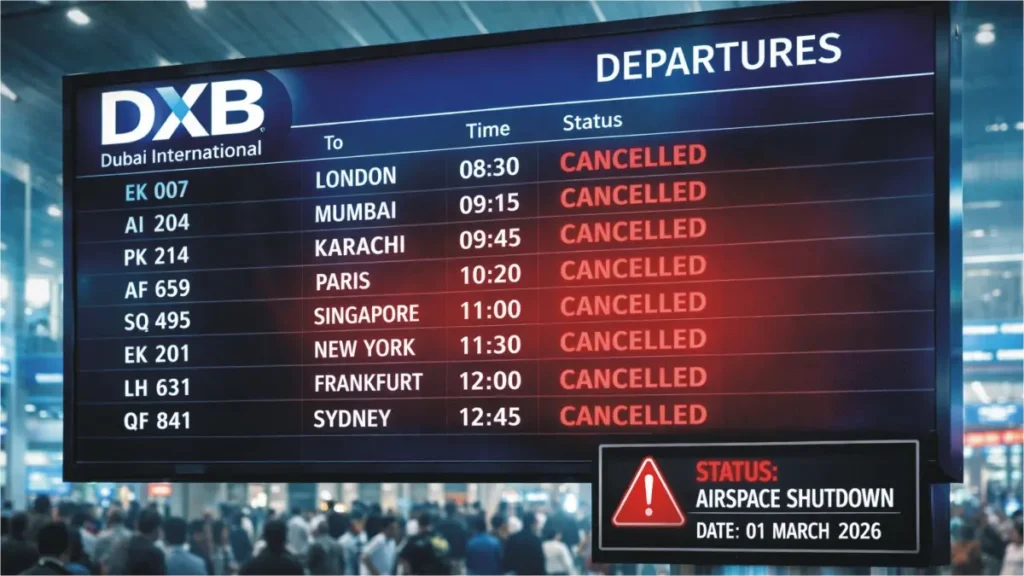
Live Updates | Published: March 1, 2026 | By Europe Observer Editorial Team
In a move that has effectively paralyzed one of the world’s most vital transit corridors, flight operations at Dubai International Airport (DXB) and Al Maktoum International (DWC) have been severely disrupted following a major military escalation in the Middle East.
With airspace closures rippling across Iran, Iraq, and parts of the Gulf, the suspension of normal flight paths has stranded hundreds of thousands of passengers. For European residents, digital nomads and South Asian expats relying on this crucial hub, the shutdown presents immediate logistical and legal challenges.
Live Disruption Data
By The Numbers: DXB Operational Impact
- Stranded Passengers: Est. 250,000+ globally within the first 24 hours.
- Flight Movements Halted: Over 1,100 daily takeoffs and landings affected.
- Airspace Closures: Complete closures over Iran, Iraq, Kuwait, and Bahrain.
- EU Aviation Safety Agency (EASA): High-Risk Conflict Zone Bulletin active.
The Airline Breakdown: Who is Grounded?
The closure does not just impact the UAE; it shatters the connecting network for airlines worldwide.
- The Gulf Carriers: Emirates and Flydubai, which account for the vast majority of DXB traffic, have grounded hundreds of wide-body aircraft. Incoming flights from Europe and Asia are being diverted to secure regional airports. Etihad (Abu Dhabi) and Qatar Airways (Doha) are operating on severe delays, forcing flights into narrow, congested safe corridors.
- European Airlines: The EASA warning has prompted immediate action. Lufthansa, Air France-KLM, and British Airways have suspended all operations to the Gulf region. Wizz Air has similarly halted its low-cost routes connecting Eastern Europe to the UAE.
- The South Asian Connection: Crucially for the expat workforce, Asian and Subcontinent carriers—including IndiGo, Air India, and PIA—have frozen their high-frequency UAE routes. This severs the primary travel artery for skilled professionals transiting from South Asia to the European Union.
Your Rights: EU 261 Duty of Care
If you are flying on a European airline (e.g., Lufthansa, BA) or departing from an EU airport, you are protected under EU Regulation 261/2004.
While airlines are not required to pay cash compensation for delays caused by “extraordinary circumstances” (such as war or airspace closure), they are legally obligated to provide a Duty of Care. This means your airline must provide:
- Meals and refreshments proportionate to the waiting time.
- Hotel accommodation if an overnight stay becomes necessary.
- Transport between the airport and the place of accommodation.
Travelers are advised to keep all receipts if they are forced to book their own hotels due to overwhelmed airline staff.
Also Read:
Schengen Visa Expirations: What You Must Do
For digital nomads, healthcare recruits, and international students caught in the crossfire, the delays present a legal threat.
If you are holding a Schengen Transit Visa or your entry window into the European Union is expiring while you are stuck in your home country or a transit hub:
- Do not panic, but act immediately.
- Contact the Embassy: Email the consular section of your destination country immediately with your flight cancellation proof.
- Keep Documented Proof: Save all airline cancellation emails and official NOTAMs (Notices to Air Missions) to prove to border control that your delay was due to force majeure (unforeseeable circumstances).
Europe Observer will continue to monitor the airspace restrictions and update this page as EASA and regional aviation authorities release new directives.
Our Top Stories


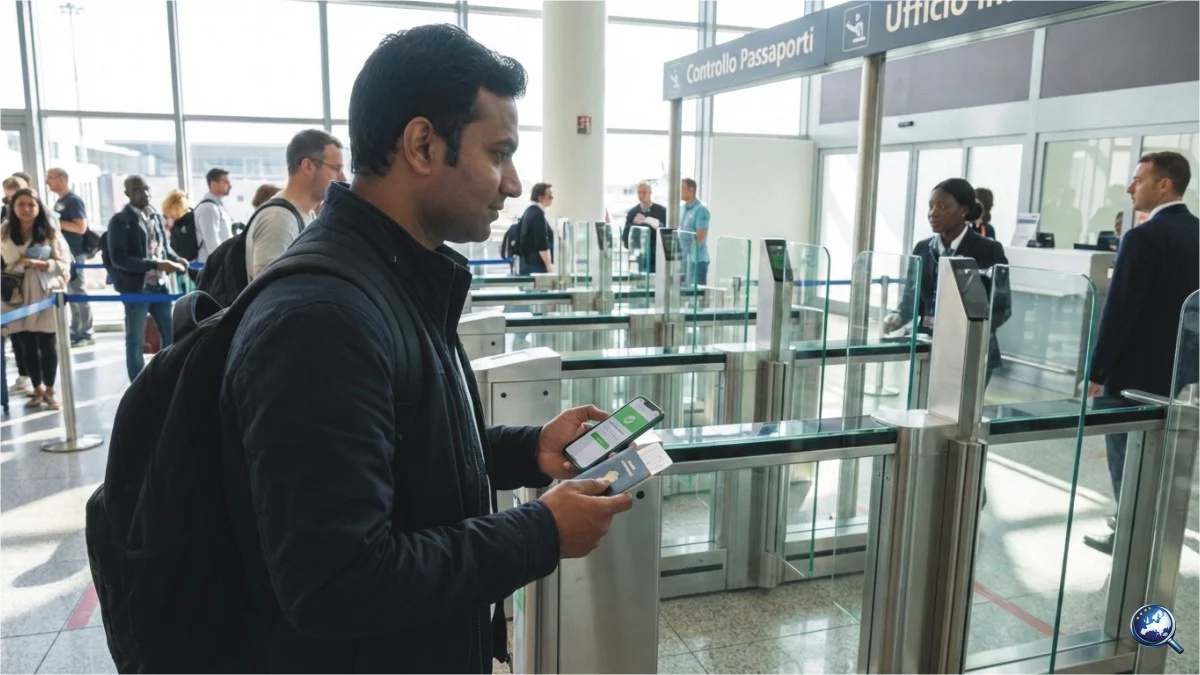


J. Maham is a specialized travel and immigration analyst with a focus on European work permits and South Asian’s mobility. With over 5 years of experience tracking global visa policy shifts, Maham provides verified, actionable insights for professionals seeking legal pathways to the EU and beyond.