
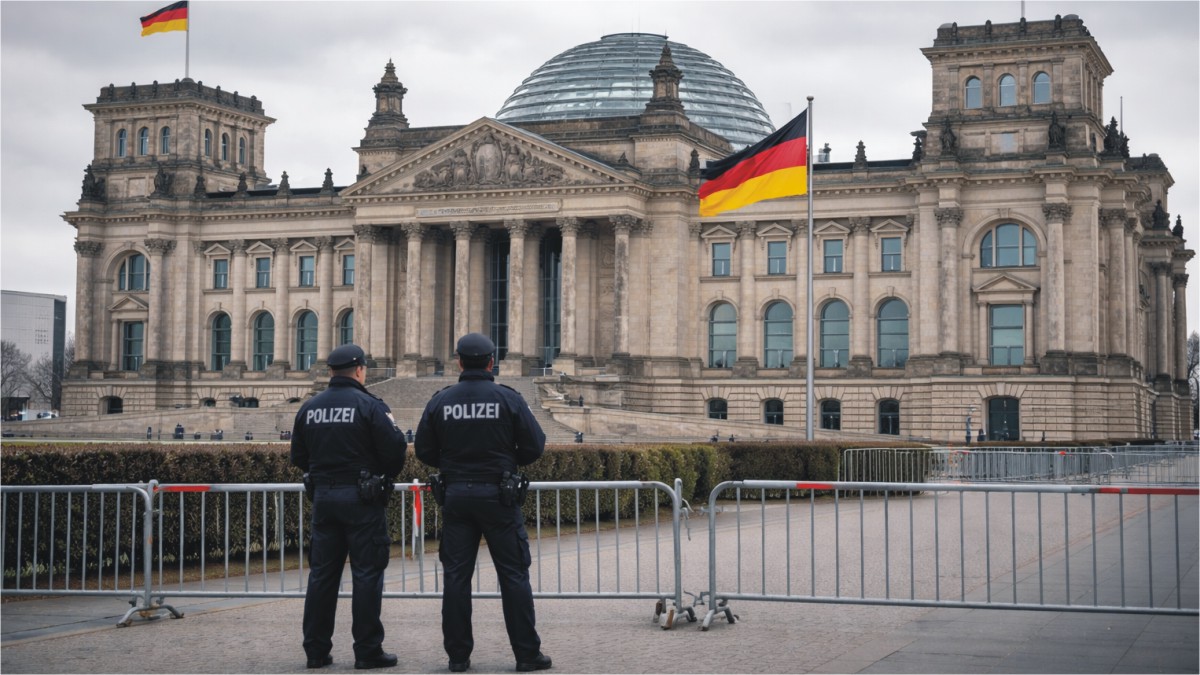
Starting now, Germany is moving to lock its asylum system into a new European framework that will reshape how protection claims are handled across the bloc. The shift follows the finalisation of national laws to implement the EU’s Common European Asylum System, or CEAS, turning a 2024 agreement into binding rules ahead of a June 2026 deadline.
The change matters beyond Germany. Europe’s largest economy sits at the centre of EU migration flows. Any tightening or redesign in Berlin sends pressure through border states, transit routes, courts, and political systems across the union.
Germany Aligns Its Asylum System With EU Law
Germany’s federal government, led by the Christian Democratic Union and Christian Social Union in partnership with the Social Democratic Party, has completed its legislative package to apply CEAS rules in domestic law.
The Bundestag is expected to approve the changes in February. Final consent is still required from the Bundesrat, which represents Germany’s 16 federal states.
Once passed, the law will bind Germany to the same asylum standards as Italy, Greece, Spain, and all other EU members. Officials describe this as a move toward uniform control after years of uneven enforcement.
Special Centers Signal a Harder Line on Transfers
One of the most visible changes is the creation of special asylum centres for so called Dublin cases. These involve people already registered in another EU country.
Under the new framework, these cases can be held in closed facilities while transfer decisions are enforced. Federal officials argue this reduces disappearances and speeds up returns within the EU system.
Human rights groups say the measure marks a sharp turn. Pro Asyl, one of Germany’s largest advocacy organizations, warns that detention risks becoming routine rather than exceptional.
Federal States Hold the Operational Power
The law does not force states to build or operate these centres. That decision rests with regional governments.
Germany’s federal structure means implementation will vary between Bavaria, North Rhine Westphalia, Saxony, and other states. This raises the risk of uneven enforcement inside Germany itself.
The Bundesrat vote will reflect this tension. Several states have already signalled concern over costs, staffing, and legal exposure.
Children and Families Remain a Political Fault Line
The government has written protections for minors and families into the draft law. As a rule, children and parents should be allowed to leave closed facilities after six months.
SPD lawmakers framed this as a red line during coalition talks. They argue that public support for reform depends on visible safeguards for vulnerable groups.
Critics counter that curfews and confinement from the first day still amount to detention, even if time limits exist.
Pressure From Courts and Civil Society Builds
Legal challenges are expected. Pro Asyl says the draft law goes beyond what EU rules require and risks breaching constitutional protections.
The group points to curfews, movement limits, and the possible detention of vulnerable people. It argues these measures will face scrutiny from German courts and the European Court of Justice.
Officials acknowledge the risk but say clarity is needed after years of legal uncertainty and stalled transfers.
Why the EU Pushed CEAS Reform
The CEAS overhaul was agreed in 2024 after years of deadlock. The core issue was responsibility.
Countries at the EU’s external borders, including Italy, Greece, Bulgaria, and Croatia, have long struggled with arrivals. Northern states accuse them of failing to take back people who move onward.
The new system aims to enforce responsibility at entry points and reduce secondary movement. Interior Minister Alexander Dobrindt has described it as a “migration reversal” framework.
External Border Controls Move to the Forefront
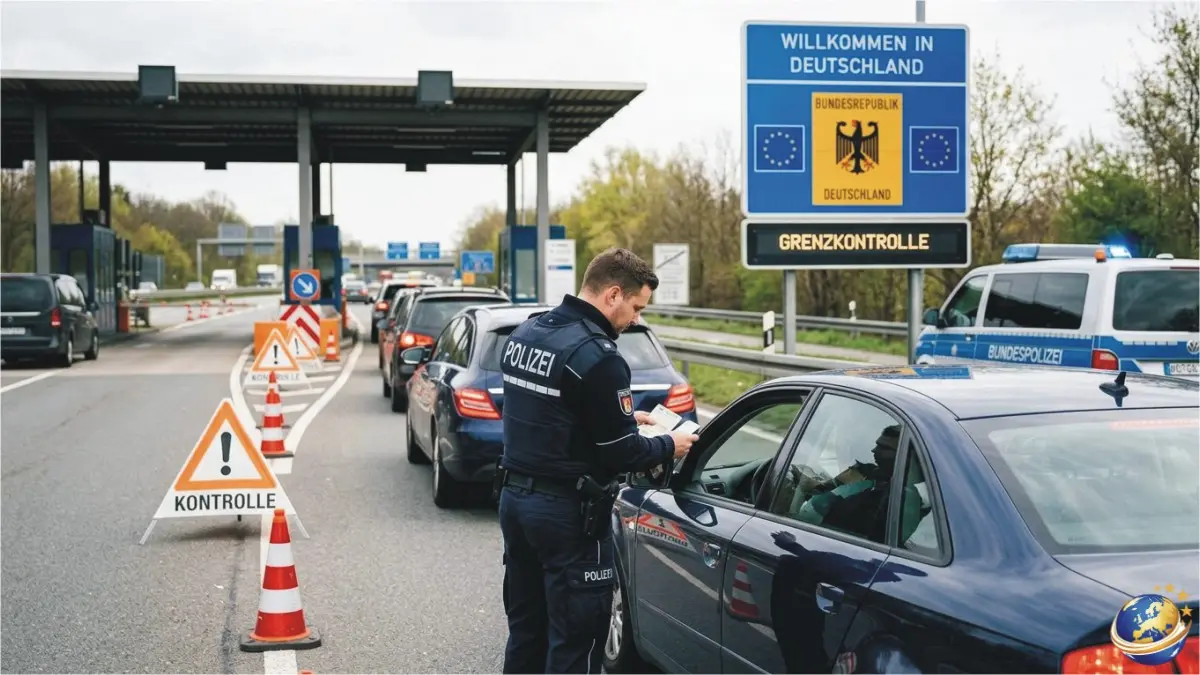
A key shift under CEAS is the focus on processing at the EU’s external borders. Fast track procedures are planned for people from countries with low recognition rates, defined at under 20 percent.
Rejected cases are expected to move quickly toward return. This approach shifts pressure away from countries like Germany and toward border states and third countries.
Critics say the model risks creating long term camps at Europe’s edges, with limited oversight and legal access.
Deportation Hubs Outside the EU Enter the Debate
Germany is now part of a five country group exploring return hubs outside the European Union. Austria, Denmark, the Netherlands, and Greece are also involved.
The idea targets rejected asylum seekers who cannot be returned to their countries of origin. Officials frame the hubs as a logistical solution to long standing bottlenecks.
Legal experts question whether such centres comply with EU and international law. No locations or timelines have been confirmed.
Domestic Politics Shape the Timing
The reform lands amid rising support for the far right Alternative for Germany party. Migration remains its central issue.
Five German states hold elections this year. Baden Württemberg and Rhineland Palatinate vote in March. Berlin, Saxony Anhalt, and Mecklenburg Western Pomerania vote in September.
In Saxony Anhalt, the AfD is polling high enough to raise the prospect of single party rule, a first in modern Germany.
A Signal Beyond Germany
Analysts see Germany’s move as a signal to other EU capitals. If Berlin enforces CEAS strictly, others are likely to follow.
If courts block key elements, pressure will return to Brussels to revise or clarify the system again.
Either way, the shift marks the end of a flexible era in European asylum policy.
What Comes Next
Over the next 18 months, attention will move from legislation to enforcement. Federal states must decide whether to build centres. Courts will test limits. Border countries will feel the strain.
By June 2026, CEAS becomes fully binding across the EU. Germany’s early move suggests a harder, more centralised system is taking shape, with consequences that reach far beyond its borders.
Lead Image Brief: A wide, high contrast photo of a secured asylum reception centre in Germany, with police vehicles at the entrance, fencing in the foreground, and an EU flag visible against a winter sky.
Check Out



Having 16 years of experience about Immigration, Visit Visa, Work Visa, Study Visa and Careers in Europe. We keep our eyes open and bring the latest and accurate content for our readers.