

Author: J. Maham
Published: 4:07 AM EST February 13, 2026
Updated: 4:35 AM EST February 13, 2026
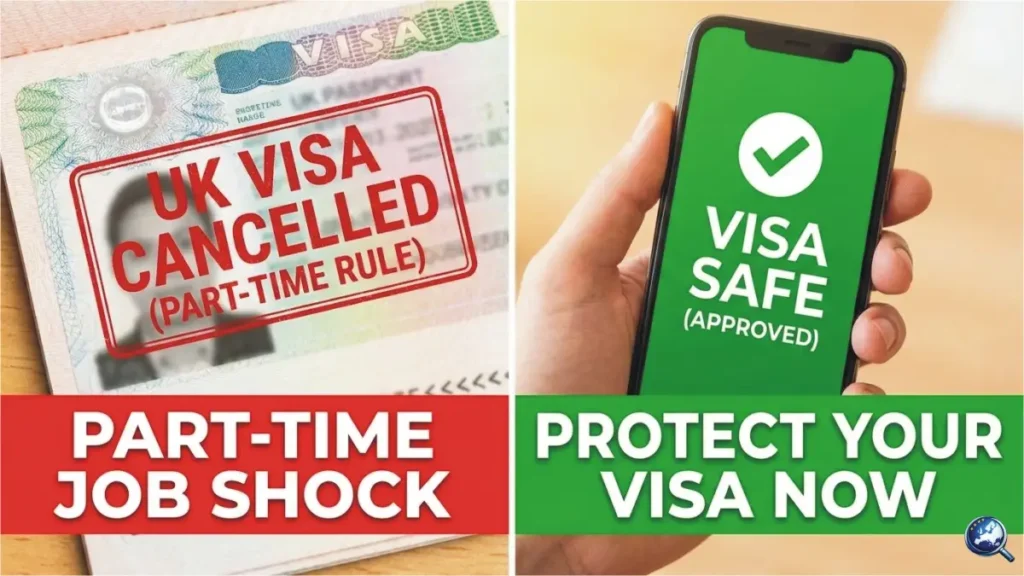
As of February 13, 2026, the Home Office has issued a critical clarification that could change everything for migrant workers. If you are not strictly following the UK Visa part-time job rules 2026, you are now at an immediate risk of visa revocation. A simple second job is no longer “just a side hustle”—it is a legal minefield.
The UK government has launched a massive “enforcement drive,” with record-breaking removal figures released just this week. But the biggest threat isn’t to those outside the system. It is to legal workers making one simple, common mistake with their Side job.
The Part-time Work Trap
Under the rules clarified today, Skilled Worker visa holders are still permitted to work up to 20 hours per week in a second job. However, the Home Office has moved the goalposts on how this work is audited.
The Shocking Truth: Most visa holders believe any job is fine as long as it’s under 20 hours. This is false. If your second job does not fall under an “eligible occupation code” or is not at the same professional level as your main role, you are technically working illegally.
The 3 Reasons People are Failing the “20-Hour Test” Right Now
- Occupation Mismatch: You cannot be a Senior Software Engineer by day and a delivery driver or retail assistant by night. Your side hustle must be in a role that is also eligible for a Skilled Worker visa (unless it’s on the specific Shortage List).
- The “Contracted Hours” Conflict: New guidance reminds workers that the 20 hours must be outside the hours you are contracted to work for your main sponsor. If there is even a 15-minute overlap, it is a breach.
- Missing Paperwork: As of February 12, employers are now required to keep “genuine evidence” that your second job is separate. If they can’t prove it during a surprise audit, your visa can be revoked on the spot.
“The margin for error is now zero. We are seeing visas cancelled not because people are overstaying, but because they didn’t realize their weekend job didn’t match their SOC code.” — Immigration Compliance Expert, 12th, Feb 2026
How to Pass the Test and Protect Your Visa
If you have a side hustle or are planning one, follow this Emergency Checklist to stay safe:
- Check the SOC Code: Ensure your second job’s occupation code (e.g., 2136 for Programmers) is on the Home Office Eligible Occupations List. If it’s not, you must quit immediately.
- The “Same Level” Rule: Your side job should generally be at the same professional level (RQF Level 6) as your main job.
- Monitor the 20-Hour Cap: This is a strict limit. Working 21 hours—even once—is grounds for immediate deportation under the new 2026 enforcement protocols.
- Get a “part-time Job Letter”: Ask your second employer for a formal statement confirming your hours and job title, and keep this ready for any Home Office “Right to Work” checks.
Why the Timing is Critical
With the salary threshold now at £41,700 and the English requirement raised to B2 as of January 2026, the Home Office is looking for any reason to trim visa numbers. Don’t let a few extra hours of pay cost you your future in the UK.
Check Out






J. Maham is a specialized travel and immigration analyst with a focus on European work permits and South Asian’s mobility. With over 5 years of experience tracking global visa policy shifts, Maham provides verified, actionable insights for professionals seeking legal pathways to the EU and beyond.